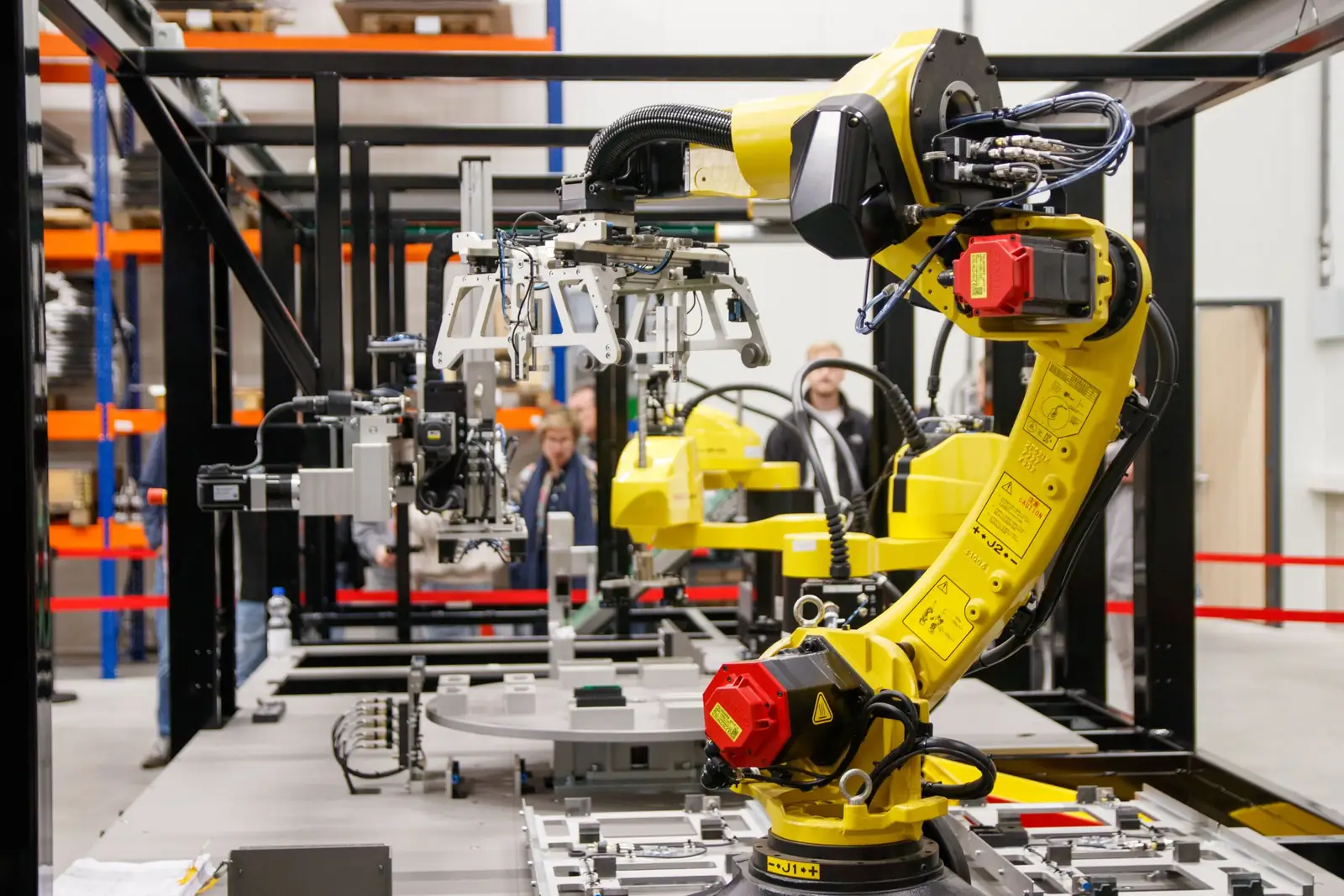
A print answers a fit question. A factory answers a volume question.
Most briefs that arrive as 'we need this 3D printed' are actually one of three jobs: a replacement that has to sit on a machine already in the field, a first article so a contractor can price a tool, or a character or enclosure that has to be sectioned for a printer that tall.
Those are product engineering problems. A public generator or a render farm will not tell you whether the drip tray sits on the rails, whether the lock survives another season, or whether a two-metre mascot can be printed and assembled. We walk through that distinction, and the UAE gates that sit after a working prototype, in taking a hardware product to market in the UAE.
When printing is the wrong next step
Print is the wrong answer when the part is already a commodity, when the volume will never justify even a short batch, or when the real problem is a drawing the factory cannot use. Injection moulding, sheet metal and a purchased catalogue part each beat a printed piece once the geometry is stable and the count is high.
A bottle designed for moulding is a moulding job. We still model it so the toolmaker has draft, wall and shut-off. The print, if there is one, is only there to check the hand feel. That is the injection-moulded bottle pattern: the process leads, the printer does not.
What a Dubai workshop actually needs from the file
The useful deliverable is not a screenshot. It is a model that can be sectioned, a wall thickness the machine can hold, joints that assemble, and a material chosen for the job - food-adjacent, load-bearing, or only a fit check.
Reverse-engineered replacements start from the worn part, not from a catalogue. That is how the Malongo parts library was built: the piece in the hand sets the tolerance. A later break of the same clip starts from the model.
After the first article
If the print is right, the next conversation is batch, tool or contractor. If it is wrong, the next conversation is a cheaper revision, not a container of the same mistake.
That is the whole how we work path for physical products: measure and model, print or tool a first article, fit and revise, then batch or manufacture. You keep the files. If you already have a broken part or a drawing, send the outline.