Retrieval
RAG System Development in Dubai
Ingestion, embeddings, retrieval and grounded generation over the files you approve - with citations you can check.
- You own the code, access and documentation
- NDA before you share details
- Dubai-based team, optional support after launch
The problem
The files exist. The answers still take a person.
Policies, contracts, manuals and exports sit in drives. Staff still ask a colleague, or paste a chunk into a public model. A RAG system searches the approved set first, then writes an answer from what it found.
What 3AXIS builds
A first version that matches how you already work
The generation of a retrieval-augmented system: chunking and embeddings for your material, a vector index, a retrieve-then-generate path, and citations. The first version is a focused corpus - not every folder in the company.
How the path looks
The model answers after it has searched, not before.
- 01Approved files
- 02Chunk + embed
- 03Retrieve
- 04Generate
- 05Citations
In the starting version
- Document ingestion
- Chunking and embeddings
- Vector index
- Semantic retrieval
- Grounded generation
- Source citations
- Permission-aware access
- Content refresh
How we price this
Scoped after we see the work
Scope and price are written after we see the workflow, the systems involved, and what a first useful version has to do.
The first version is an approved corpus. Broad enterprise search, live sync and evaluation harnesses are scoped separately.
Optional later
- SharePoint or Drive sync
- Website chatbot on the same index
- Evaluation set and regression tests
- Authenticated internal data
Who this is for
Teams whose knowledge is PDFs and shared drives
Operations that answer the same policy question every week
Companies that want sources on the answer, not a fluent guess
How implementation works
- 01
Map the workflow
We start from how the work actually happens today - the spreadsheets, inboxes and systems involved - and agree what a first useful version has to do.
- 02
Agree the scope
You get a written outline of what is in, what is later, and a price that matches that scope. Nothing is assumed.
- 03
Build and review
We build in short cycles you can see. Your team uses the draft against real work so the next pass is based on use, not a slide.
- 04
Launch and hand over
We release it, migrate what you need, and hand over the code, access and documentation. Support afterwards is optional, not a lock-in.
Related work
Existing projects and writing that sit next to this problem - not invented case studies.
AI & Automation
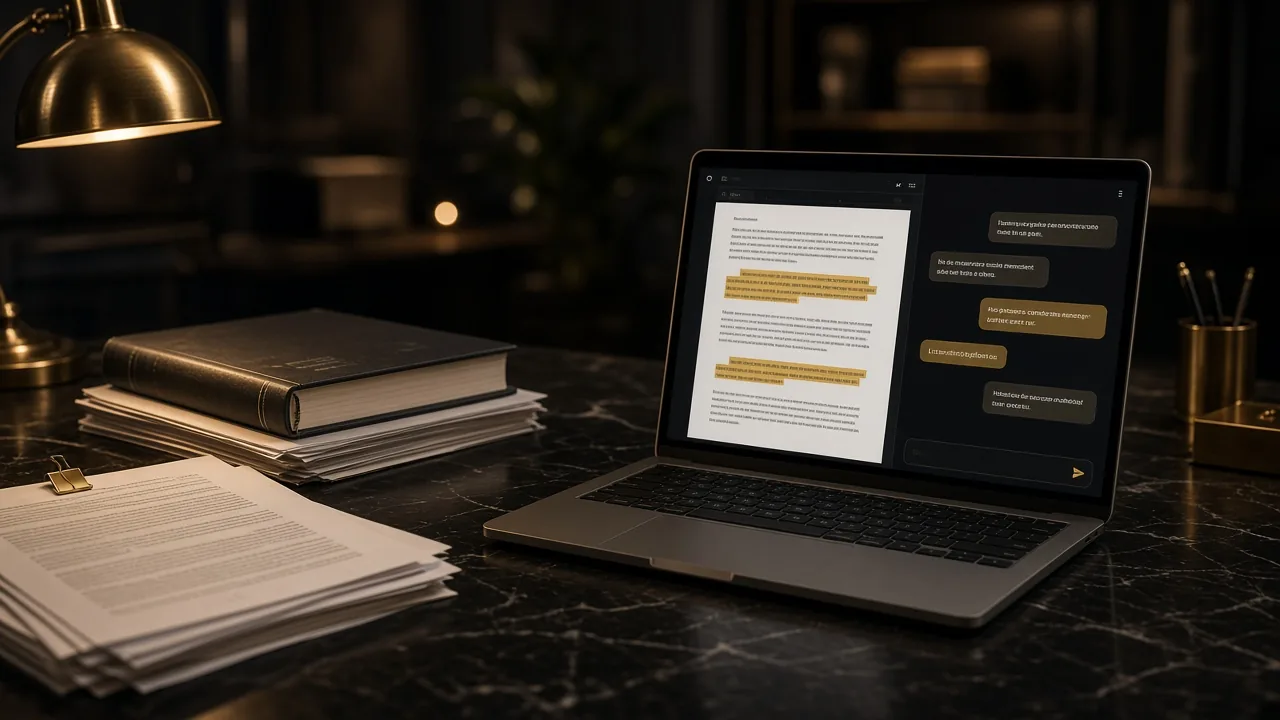
Document Intelligence Assistant
An assistant that reads your files and answers questions from what is actually in them.
Software Development | AI
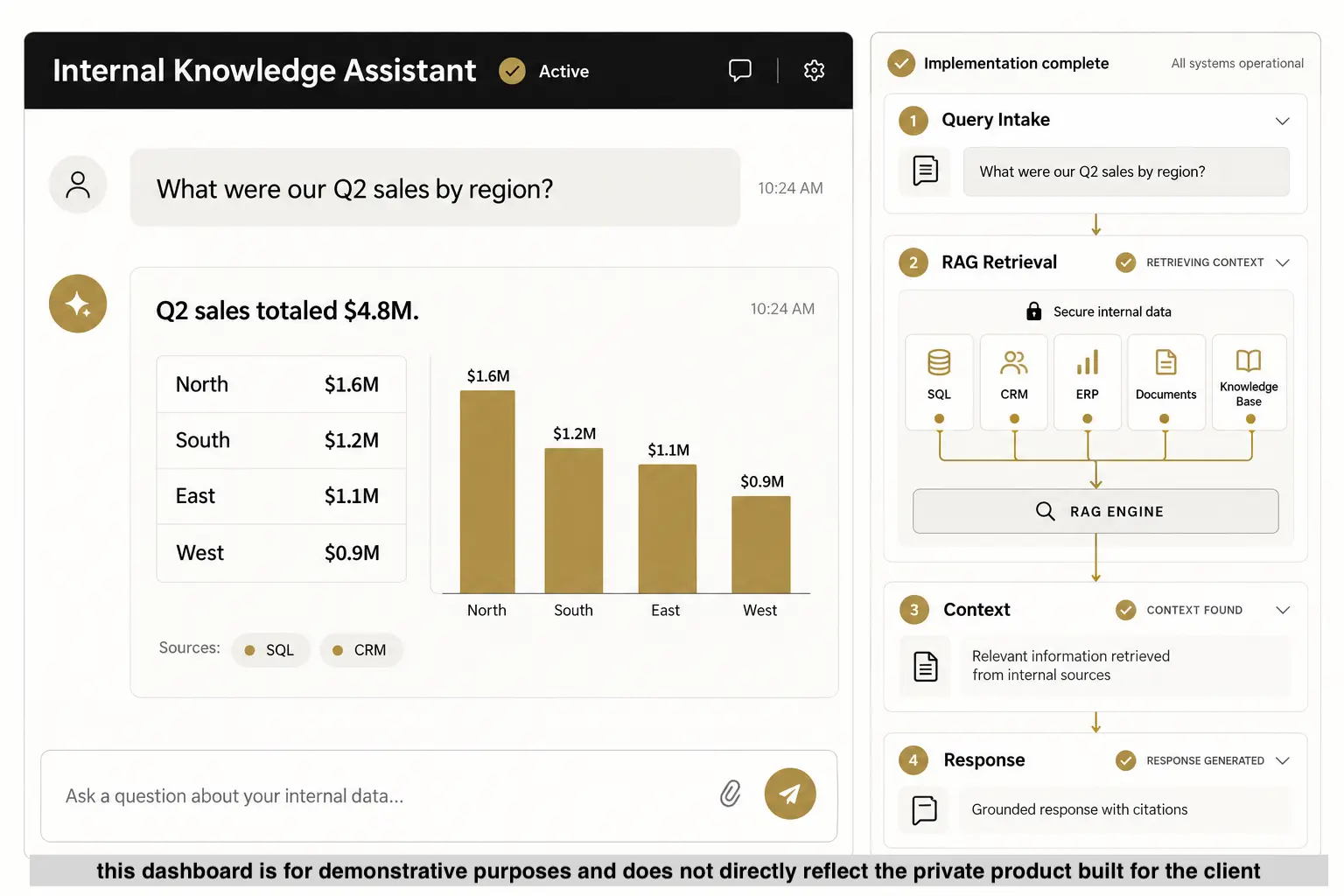
Internal Database Chatbot for Enterprise
A chatbot that allows employees to query internal databases using natural language.
Insight
The Future of AI in Enterprise Solutions
Where AI earns its place inside an operating business, and where it quietly costs more than it returns.
Questions worth asking first
The knowledge assistant is the product people talk to. This page is the RAG stack underneath: ingestion, index, retrieval and generation. Many clients buy both as one engagement.
We constrain it to retrieved passages and show the sources. Nothing is guaranteed correct, which is why citations and a path to a person are part of doing this properly.
No. The first version is a corpus you choose. Messy scans, access rules across departments and constant sync are scoped separately.
RAG System Development in Dubai
Scope and price are written after we see the workflow, the systems involved, and what a first useful version has to do.